

 Aerospace & Defence
  Agriculture
  Automotive
  Building & Construction
  Chemicals
  Digital Technologies
  Energy & Power
  Equipment & Machinery
  FMCG
FMCG  Hospitality & Tourism
  Metallurgy
  Oil & Gas
  Retail Businesses
  Materials
  Banking & Financial Services
  Electronics & Semiconductors
  Healthcare & Pharmaceutical
  Packaging




Market Overview
According to Novatrends Market Intelligence, the Global Oil and Gas Biocide Market was valued at USD 3.8 billion in 2025 and is anticipated to propel at a growth rate of 5.2% from 2026-2036.
The oil and gas biocide market provides oilfield biocide chemical solutions for oilfield microbial control — preventing microbial-induced corrosion, reservoir souring, pipeline biofouling, and hydrogen sulfide (H2S) generation caused by sulfate-reducing bacteria (SRB), acid-producing bacteria (APB), and general heterotrophic bacteria in oilfield water systems. Glutaraldehyde biocide is the most widely used non-oxidizing biocide for oilfield water treatment biocide programs due to broad-spectrum efficacy against sulfate reducing bacteria treatment, compatibility with produced water chemistry, and established regulatory acceptance. THPS biocide (tetrakis(hydroxymethyl)phosphonium sulfate) is used in produced water biocide treatment and oilfield water treatment biocide applications with advantages in iron sulfide dissolution and low environmental toxicity. Quaternary ammonium biocide (quats) provides cost-effective oilfield microbial control for water treatment systems and storage tanks. Oxidizing biocide oilfield applications use chlorine, hypochlorite, and chlorine dioxide for shock treatments in injection water systems. Non-oxidizing biocide products — including glutaraldehyde biocide, THPS biocide, isothiazolone, and bromide-based formulations — dominate continuous oilfield biocide treatment programs.
Market Dynamics
The market is driven by sustained upstream oil and gas production investment requiring oilfield water treatment biocide and pipeline biocide treatment programs, growing shale oil and gas activity in the U.S. Permian Basin driving biocide for fracking demand, and offshore biocide treatment investment in deepwater Gulf of Mexico and North Sea fields. Produced water volumes from mature oilfields are growing, requiring continuous produced water biocide treatment programs. Enhanced oil recovery biocide demand is growing with EOR project expansion in the Middle East and North America. Biocide resistance oilfield challenges are driving new oilfield biocide chemistry development. Microbial corrosion inhibition oil and gas infrastructure requirements are intensifying with aging pipeline assets. Oil and gas biocide market size reflects growing oilfield biocide demand driven by expanded produced water volumes and stricter microbial control standards. Oilfield biocide demand is rising across upstream, midstream, and downstream segments globally. Glutaraldehyde biocide and THPS biocide alternatives with lower environmental profiles are under development. In January 2024, Dow Chemical expanded oilfield biocide and oilfield water treatment biocide portfolio with THPS biocide and glutaraldehyde biocide formulations, while Lonza Group advanced non-oxidizing biocide for oilfield microbial control and sulfate reducing bacteria treatment in North American shale plays. Oil and gas biocide market growth continues with global upstream production activity and tightening microbial control standards.
Segment Analysis
By Type: Oxidizing Biocides holds the largest share of the Oil and Gas Biocide market, supported by strong adoption and well-established supply chains across key end-use industries. Non-Oxidizing Biocides is the fastest-growing segment, propelled by rising investments and expanding application scope in high-growth sectors.
By Application: Oilfield Water Treatment holds the largest share of the Oil and Gas Biocide market, supported by strong adoption and well-established supply chains across key end-use industries. Pipeline Biocide Treatment is the fastest-growing segment, propelled by rising investments and expanding application scope in high-growth sectors.
By End-Use: Upstream holds the largest share of the Oil and Gas Biocide market, supported by strong adoption and well-established supply chains across key end-use industries. Midstream is the fastest-growing segment, propelled by rising investments and expanding application scope in high-growth sectors.
Recent Developments in Oil and Gas Biocide Market
- In January 2024, Dow Chemical Company expanded oilfield biocide and oilfield water treatment biocide with THPS biocide and glutaraldehyde biocide portfolio enhancements, advancing microbial corrosion inhibition, sulfate reducing bacteria treatment, and pipeline biocide treatment for North American upstream and midstream oil and gas biocide market customers.
- In April 2024, Lonza Group AG advanced non-oxidizing biocide and oilfield microbial control with glutaraldehyde biocide and quaternary ammonium biocide formulations for shale biocide for fracking and produced water biocide treatment, expanding oil and gas biocide market in North American Permian Basin and enhanced oil recovery biocide programs.
- In July 2024, BASF SE expanded oilfield biocide and offshore biocide treatment with non-oxidizing biocide and oxidizing biocide oilfield specialty formulations, advancing sulfate reducing bacteria treatment, oilfield water treatment biocide, and pipeline biocide treatment for North Sea and Gulf of Mexico offshore oil and gas biocide market customers.
- In September 2024, Kemira Oyj advanced oilfield water treatment biocide and produced water biocide treatment with THPS biocide and quaternary ammonium biocide oilfield program development, launching enhanced oil recovery biocide and microbial corrosion inhibition solutions for Middle East and North American oil and gas biocide market growth.
- In December 2024, Nouryon (AkzoNobel Specialty Chemicals) expanded oilfield biocide and biocide for fracking with isothiazolone non-oxidizing biocide and glutaraldehyde biocide blends, advancing sulfate reducing bacteria treatment, oilfield microbial control, and biocide resistance oilfield rotation programs for shale and conventional oil and gas biocide market.
- In March 2025, Solenis LLC advanced pipeline biocide treatment and oilfield water treatment biocide with new non-oxidizing biocide chemistry, launching quaternary ammonium biocide and THPS biocide combination programs for microbial corrosion inhibition, produced water biocide treatment, and enhanced oil recovery biocide in global oil and gas biocide market growth programs.
Top Oil and Gas Biocide Market - Key Market Players
- Dow Chemical Company
- Lonza Group AG
- BASF SE
- Kemira Oyj
- Nouryon
- Solenis LLC
- Stepan Company
- Troy Corporation
- Albemarle Corporation
- Accepta Ltd.
- Solvay S.A.
- Buckman Laboratories
- ChampionX Corporation
- Innospec Inc.
- SNF Group
Global Oil and Gas Biocide Market Report- Scope (Customizable)
Scope | Description |
Historic Period | 2021-2024 |
Base Year (Esti.) | 2025 |
Forecast Period (F) | 2026-2036 |
Market Values | USD Billion |
By Type | Oxidizing Biocides, Non-Oxidizing Biocides, Glutaraldehyde Biocide, THPS Biocide, Quaternary Ammonium Biocide |
By Application | Oilfield Water Treatment, Pipeline Biocide Treatment, Enhanced Oil Recovery, Fracking Biocides, Offshore Biocide |
By End-Use | Upstream, Midstream, Downstream |
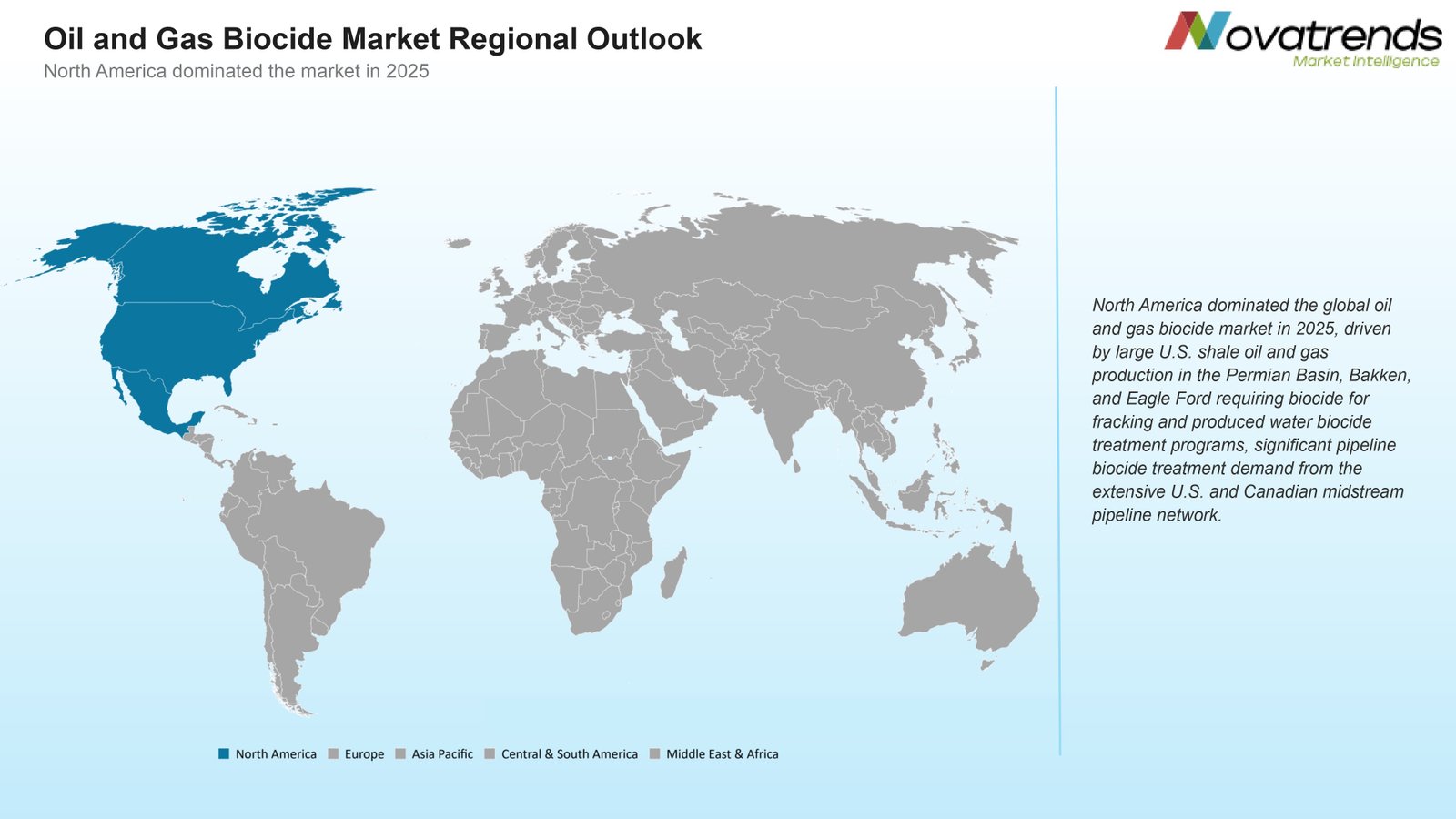
Market by Region | North America (NA), Europe (EUR), Asia Pacific (APAC), Central & South America (CSA), and Middle East & Africa (MEA) |
Countries Covered | U.S., Canada, and Mexico; Germany, France, UK, Russia, Italy, Spain, and Netherlands; China, India, Japan, South Korea, and Australia; Brazil, Argentina; Saudi Arabia, UAE, Turkey, Egypt, and South Africa |
Detailed Market Segmentation
- By Type (Revenue in USD Million)
- Oxidizing Biocides
- Non-Oxidizing Biocides
- Glutaraldehyde Biocide
- THPS Biocide
- Quaternary Ammonium Biocide
- By Application (Revenue in USD Million)
- Oilfield Water Treatment
- Pipeline Biocide Treatment
- Enhanced Oil Recovery
- Fracking Biocides
- Offshore Biocide
- By End-Use (Revenue in USD Million)
- Upstream
- Midstream
- Downstream
- By Region (Revenue in USD Million)
- North America
- U.S.
- Canada
- Mexico
- Europe
- Germany
- France
- UK
- Russia
- Italy
- Spain
- Netherlands
- Asia Pacific
- China
- India
- Japan
- South Korea
- Australia
- Central & South America
- Brazil
- Argentina
- Middle East and Africa
- Saudi Arabia
- UAE
- Turkey
- Egypt
- South Africa
- North America
 GET A FREE SAMPLE
 Need a custom report?