

 Aerospace & Defence
  Agriculture
  Automotive
  Building & Construction
  Chemicals
  Digital Technologies
  Energy & Power
  Equipment & Machinery
  FMCG
FMCG  Hospitality & Tourism
  Metallurgy
  Oil & Gas
  Retail Businesses
  Materials
  Banking & Financial Services
  Electronics & Semiconductors
  Healthcare & Pharmaceutical
  Packaging




Battery Cooling Plate Market Overview
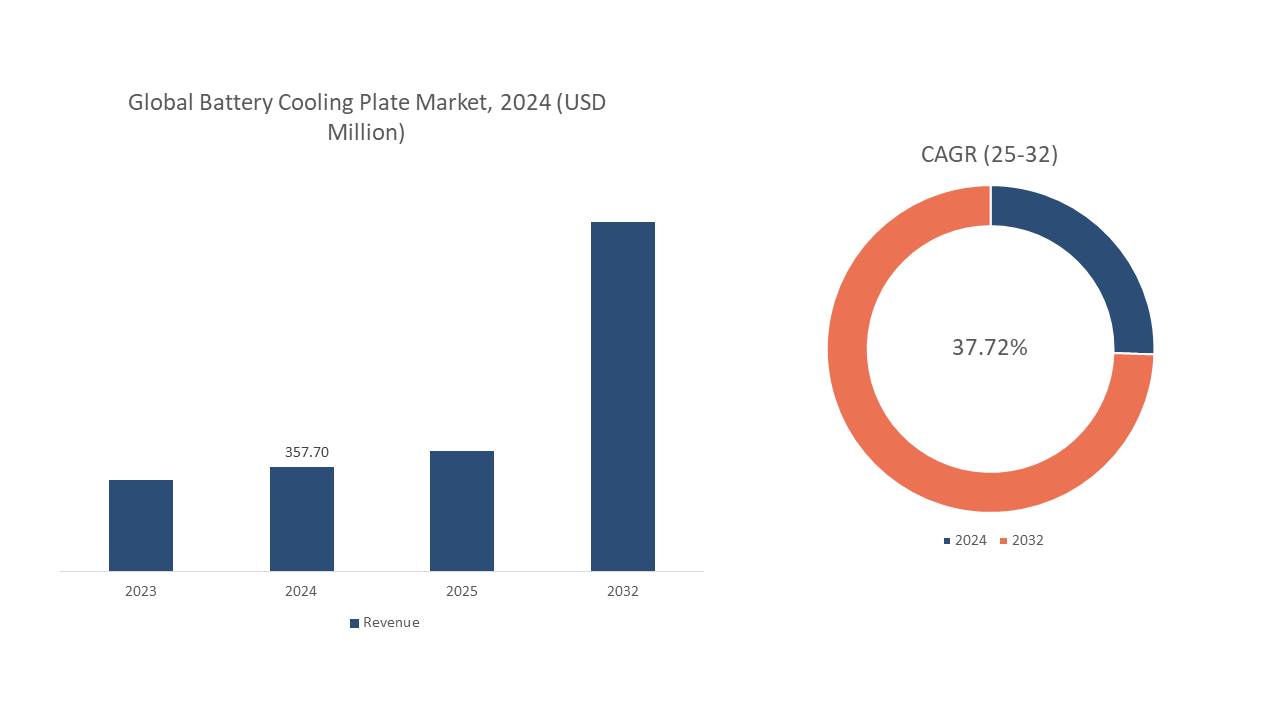
According to Novatrends Market Intelligence, the global battery cooling plate market is valued at USD 357.70 million in 2024. The automotive industry is undergoing a significant transformation driven by the global focus on green energy. Government initiatives promoting sustainability are expected to positively impact industry growth. This has led to a surge in research and development (R&D) for lightweight, energy-efficient, and sustainable materials. Notably, the electric vehicle (EV) market has seen remarkable growth, fueled by a growing consumer preference for renewable energy solutions.
The global landscape is experiencing a significant shift towards sustainable energy solutions. This has had a profound impact on the automotive industry, with electric vehicles (EVs) taking center stage. As EV adoption surges, so too does the demand for a critical component – the battery cooling plate. Governments worldwide are actively promoting green energy initiatives, offering subsidies and incentives for EV purchases. This policy push directly translates into increased EV production, driving the need for efficient battery thermal management systems.
Battery Cooling Plate Market Recent Developments
The battery cooling plate market is anticipated to propel at a compounded annual growth rate (CAGR) of 37.72% from 2025-2034. The battery cooling plate market is witnessing significant expansion, driven by increasing demand for electric vehicles across the globe.
The battery cooling plate market is highly competitive due to the presence of major market players actively engaged in implementing strategic initiatives such as increasing investments, production expansion, enlarging distribution networks, and others. For instance,
- In August 2024, MAHLE GmbH has developed a bionic structure based on nature for the cooling channels causing the coolant to flow distinctively, significantly improving the thermodynamic performance and structural-mechanical properties of the cooling plate. This bionic plate has managed to increase the cooling performance by 10% and reduce pressure loss by 20%.
Regional Overview
North America dominated the global Battery Cooling Plate market in 2024 with a market revenue share of 51.51%. The Asia Pacific (APAC) region is emerging as the undisputed leader in the global electric vehicle (EV) market, and with this dominance comes a skyrocketing demand for battery cooling plates. This critical component ensures optimal performance and safety of EV batteries, making it an essential part of the green transportation revolution sweeping across the region.
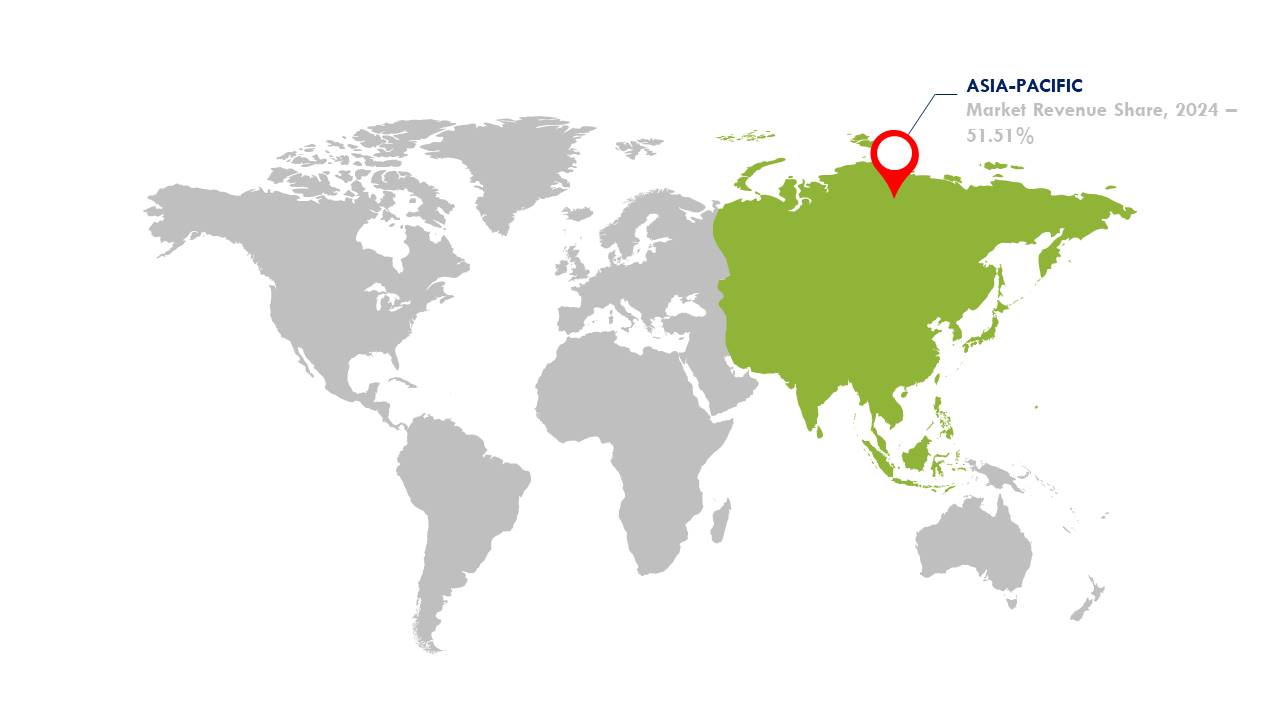
APAC is home to leading EV manufacturers like BYD, Tesla (with factories in China), and Nissan (strong presence in Japan). This robust manufacturing base translates to a high demand for battery cooling plates to equip these vehicles. Governments across APAC are actively promoting EV adoption through a combination of subsidies, tax breaks, and investments in charging infrastructure. This policy push directly translates into increased EV sales, further fueling the need for battery cooling plates.
U.S. Battery Cooling Plate Market Overview
The U.S. is experiencing a surge in electric vehicle (EV) adoption, driven by a confluence of factors. This, in turn, is fueling a booming demand for battery cooling plates, a critical component for ensuring safe and efficient EV operation. The U.S. government is increasingly prioritizing clean energy initiatives. Tax credits, consumer rebates, and investments in EV infrastructure are encouraging consumers to switch to EVs. This policy push directly translates into increased EV production, necessitating a corresponding rise in battery cooling plate demand.
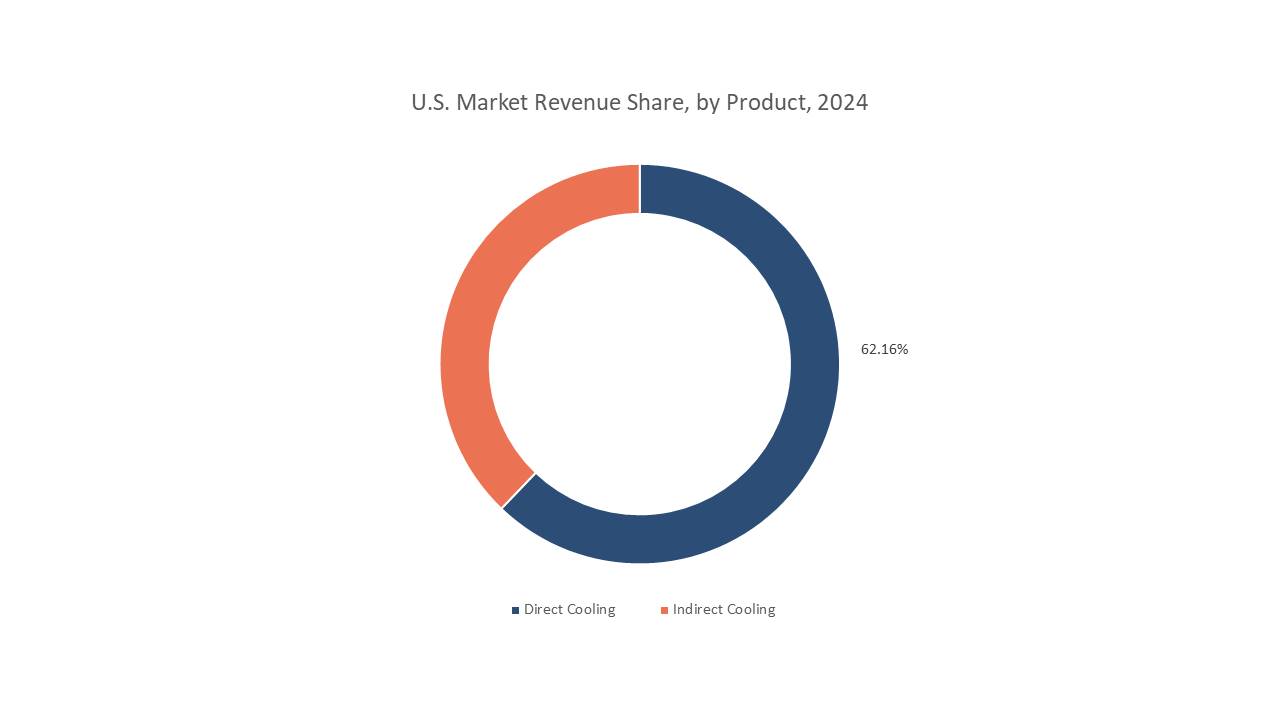
Air pollution remains a major concern in many U.S. cities. EVs offer a cleaner alternative to traditional gasoline-powered vehicles, leading to a growing consumer preference for them. As environmental consciousness rises, the demand for efficient battery cooling becomes crucial for optimal EV performance.
The U.S. is actively pursuing the goal of becoming a leader in EV manufacturing. This includes attracting major EV manufacturers like Tesla and Ford to establish factories within the country. Additionally, domestic battery production is being encouraged. These developments will significantly increase the demand for battery cooling plates within the US market.
Product Overview
Direct cooling dominated the product segmentation across the global battery cooling plate market in 2024 with a market revenue share of 77.10%. Direct cooling plates are emerging as a critical technology in the race to optimize battery performance and safety in electric vehicles (EVs) and other electronic devices.
Direct cooling plates offer a more efficient heat transfer method compared to traditional air cooling systems. They establish direct contact with the heat source (battery) and use a coolant for superior heat dissipation, leading to better battery temperature control.
While direct cooling plates offer undeniable advantages in thermal management, indirect cooling plates continue to hold a significant share of the market for battery cooling in electric vehicles (EVs) and other electronic applications. Indirect cooling plates have been a reliable and well-established solution for battery thermal management for decades. Their mature technology offers a lower risk of leaks or malfunctions compared to some newer direct cooling methods.
Application Overview
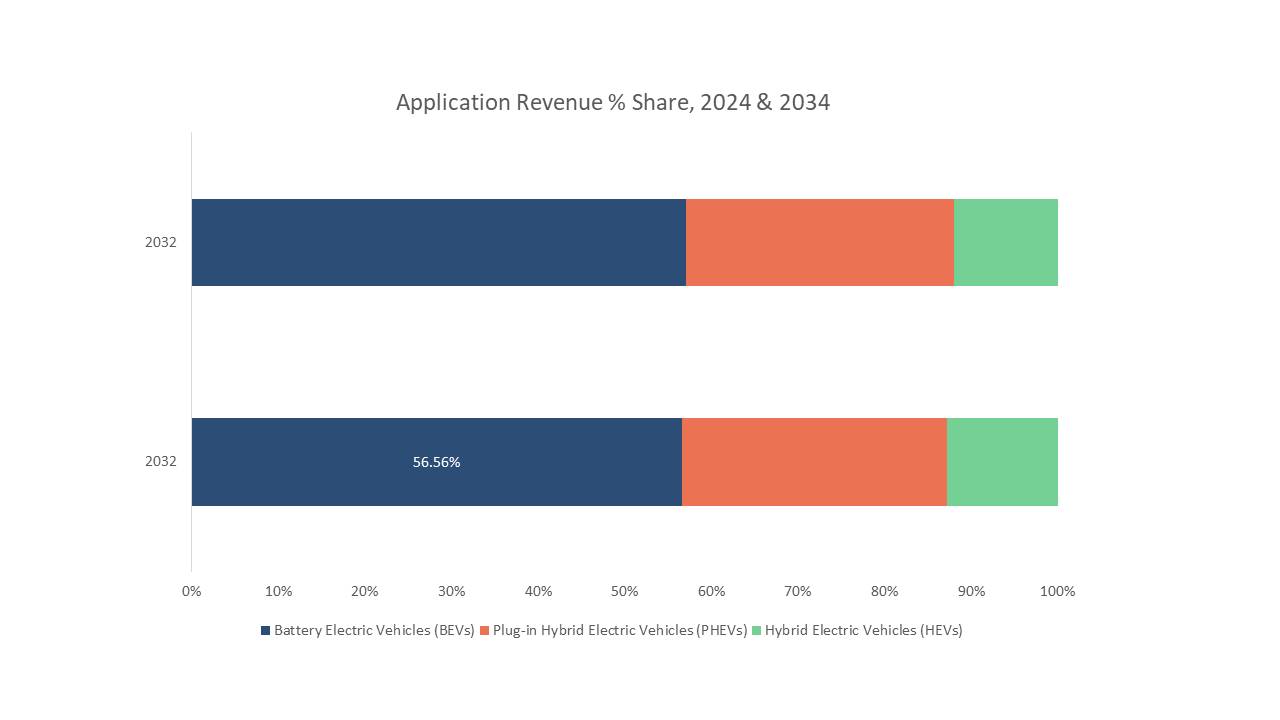
Battery Electric Vehicles (BEVs) dominated the application segmentation across the global battery cooling plate market in 2024 with a market revenue share of 56.56%. Battery cooling plates have become a critical component in the electric vehicle (EV) revolution. As EV adoption surges globally, so too does the demand for these plates that ensure optimal battery performance, safety, and longevity.
Lithium-ion batteries, the dominant technology in EVs, are highly sensitive to temperature. Overheating can degrade battery performance, reducing range and acceleration. Battery cooling plates ensure efficient heat dissipation, maintaining optimal temperatures for peak performance.
High temperatures accelerate battery degradation, shortening its overall lifespan. Battery cooling plates extend battery life by preventing thermal damage, thereby increasing the overall value proposition of EVs for consumers.
Market Characteristics
Major automotive component manufacturers such as Valeo, Dana Limited, MAHLE GmbH, and DENSO CORPORATION are leveraging their existing relationships with automakers and expertise in thermal management to establish themselves as key players in the battery cooling plate market. They often offer a wide range of cooling solutions, including both direct and indirect cooling plates.
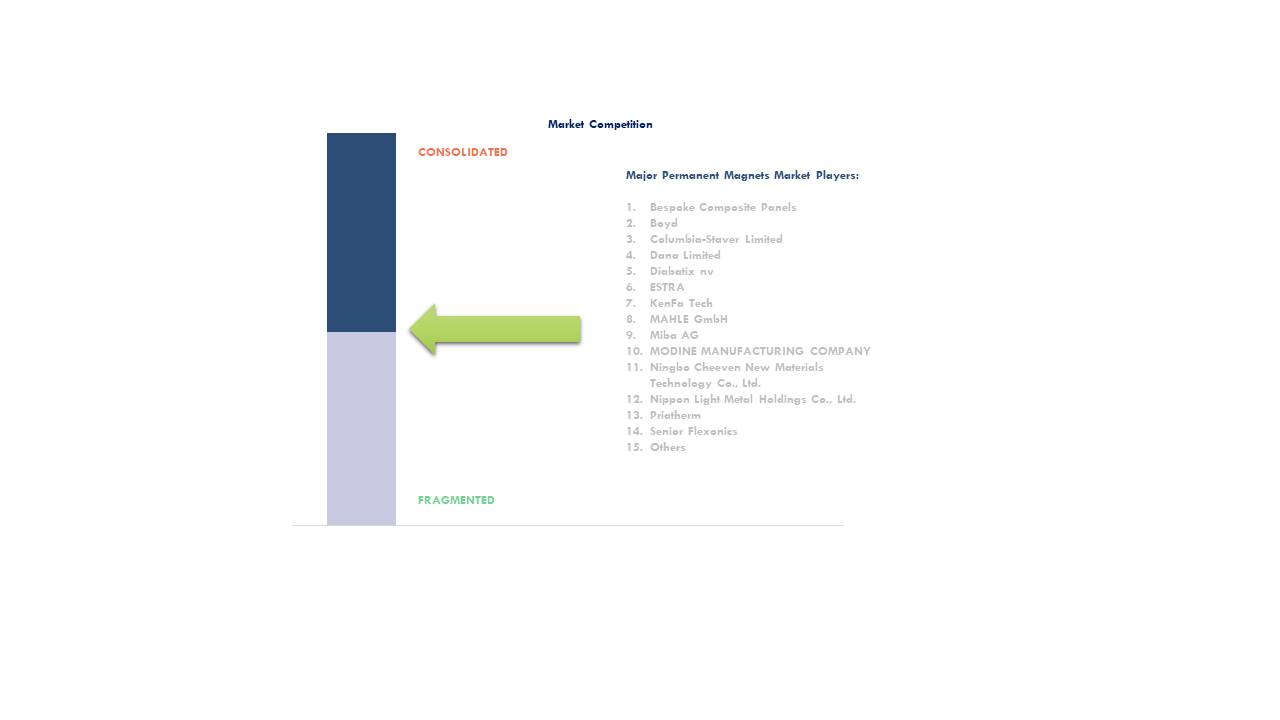
Start-ups and smaller companies with innovative cooling technologies are entering the market, focusing on advanced materials, novel designs, and lightweight solutions. They aim to differentiate themselves through technological advancements and potentially lower production costs.
Manufacturers from China, South Korea, and Japan are playing an increasingly prominent role, offering cost-competitive battery cooling plates. Their strong supply chains and focus on scalability make them attractive options for budget-conscious EV manufacturers. Consolidation is expected in the market, with established players acquiring or partnering with innovative start-ups to gain access to new technologies and strengthen their market positions.
Global Battery Cooling Plate Market Report- Scope (Customizable)
|
Scope |
Description |
|
Historic Period |
2018-2023 |
|
Base Year (Esti.) |
2024 |
|
Forecast Period (F) |
2024-2032 |
|
Market Revenue |
USD Million |
|
Market by Product |
Direct Cooling and Indirect Cooling |
|
Market by Application |
Battery Electric Vehicles (BEVs), Plug-in Hybrid Electric Vehicles (PHEVs), and Hybrid Electric Vehicles (HEVs) |
|
Market by Region |
North America (NA), Europe (EUR), Asia Pacific (APAC), Central & South America (CSA), and Middle East & Africa (MEA) |
|
Countries Covered |
U.S., Canada, Mexico; Germany, UK, Italy, France, Spain, Russia; China, India, Japan, South Korea, Malaysia, Singapore, Thailand, Vietnam, Australi & New Zealand; Brazil, Argentina; Saudi Arabia, United Arab Emirates (UAE), Iran, South Africa |
 GET A FREE SAMPLE
 Need a custom report?